Last week, we had a presenter who is a teacher currently on maternity leave. She shared with us her master’s project, which is structured around integrating Indigenous education into her practice and the BC Curriculum. One of the things she shared was her students doing beaded art activities, and then she explained how activities like these could be used as a way to connect creative art projects to Indigenous ways of knowing.
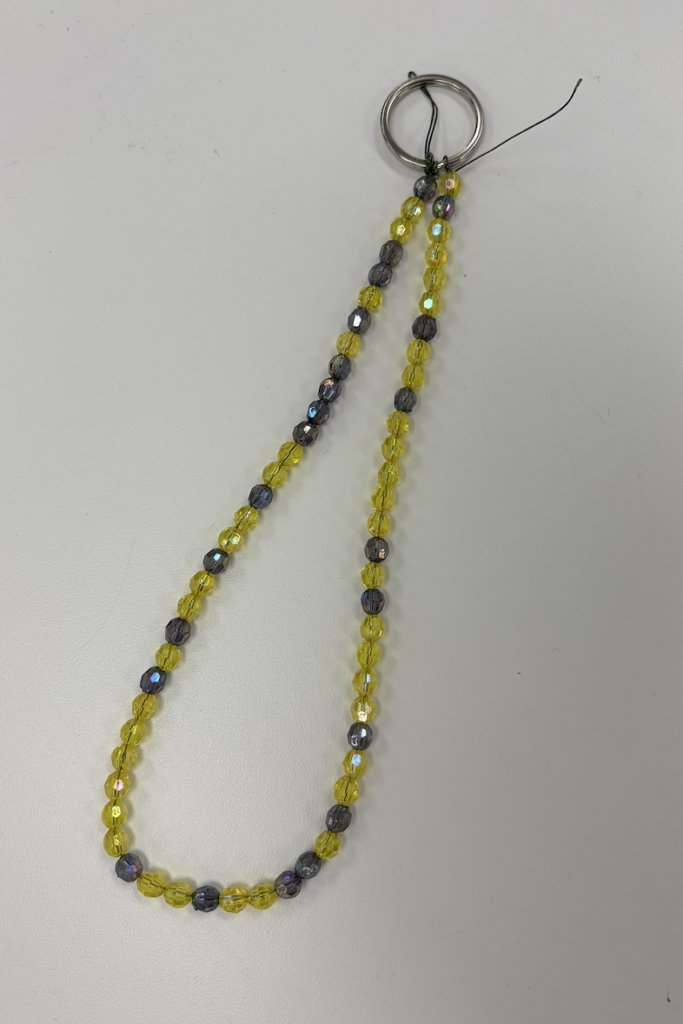
During this class, we were given the chance to do the beaded art. I learned that the bracelet we were making usually has eight lines of beads, and each line has a specific meaning. I learned that we can choose something like a sentence to represent a deeper meaning with the beads. However, because we only had a limited time in class, we went with only a word instead. For this, bracelets were provided with a coding sheet where letters represented a code. I chose to make a bracelet that says “Baby Roy” because my son is the most meaningful thing in my life, and I wanted to have something that reminded me of him.
One thing I took away from this experience is that learning about Indigenous culture has a very hands-on component which is very fun, as learning does not have to be limited to reading about Indigenous history or culture. Also tied into hands-on learning is storytelling which helps make powerful connections to something meaningful. I also felt that a practice like this can have different aspects of meaning so long as the process is explained to the learner. For example, the bracelet was not just a piece of art; there was a deep, intricate process and meaning in what we were doing. Getting to learn about the process made it so much more interesting and impactful.
Overall, having the opportunity to spend the day beading was very impactful to me because I got to engage with Indigenous culture firsthand in a way that was powerful for my practice. Lessons like these help us connect with Standard #9 in a way that is also very engaging for students at a young age, which helps me because I want to teach K-3. Also, I am a big fan of art, and I want to be an art teacher if possible, so these hands-on experiences can help students make connections to Indigenous ways of learning and create art that is personalized for them while engaging with Indigenous culture.